What Is Retina Clear?
Retina Clear is a dietary supplement sold with the goal of supporting eye health. It is meant for adults who want to give their eyes extra nutritional support, especially in a world where most of us look at phones, laptops, televisions and tablets for many hours every day. The name points to the retina, the thin layer of light-sensitive tissue at the back of the eye that turns light into signals your brain reads as images.
Like most products in the eye health category, Retina Clear is built around the idea that certain vitamins, minerals and plant compounds play a role in normal eye function. A supplement does not give you new eyesight, and it cannot undo damage that has already happened. What it can do, when the formula is sound and you take it consistently, is help fill nutritional gaps that your regular diet may leave behind.
This page is written as an independent, plain-language explainer. It is not medical advice. We explain how eye-supporting nutrients are generally discussed, what a sensible buyer should look for on a label, and what realistic expectations look like. Always rely on the exact ingredient list and directions printed on your product, because formulas and serving sizes can change.
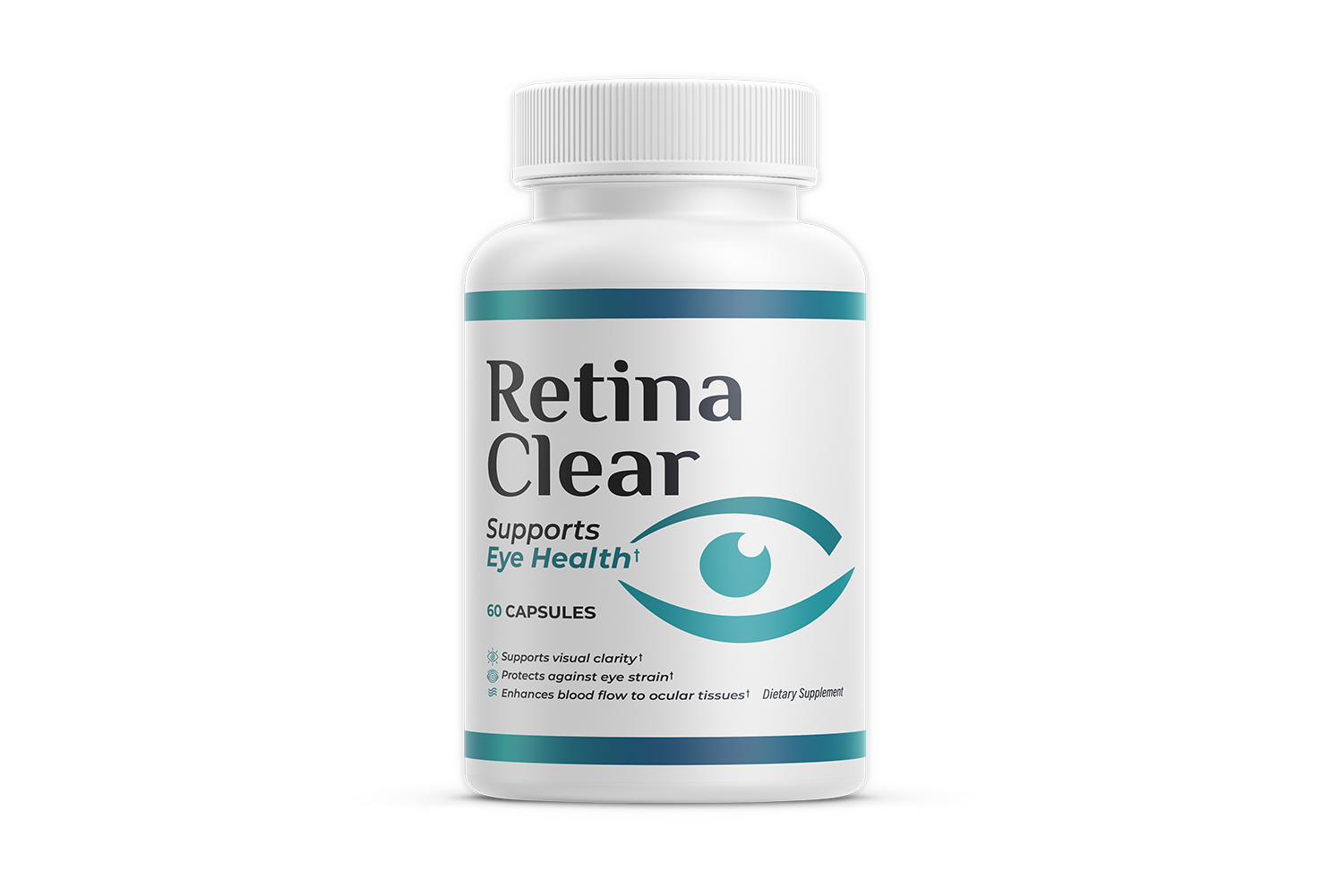
Retina Clear supplement bottle. Always read the label on your own product for the full ingredient list.
Why Eye Health Deserves Daily Attention
Vision is the sense most people fear losing, yet it is often ignored until something goes wrong. Eyes are small, complex organs with a high demand for oxygen and nutrients. They are exposed all day to light, including intense blue-violet light from the sun and from digital screens, as well as to dryness, dust, wind and air conditioning.
Over time, normal oxidative stress, ageing and lifestyle pressures can affect how comfortable and clear your vision feels. Many adults report tired eyes, dryness, irritation or trouble focusing after long hours at a desk. Some of this is related to how we use our eyes, such as blinking less when looking at a screen. Some of it relates to age. A smaller share relates to nutrition.
Good eye care is therefore built from several layers: regular eye exams, protective habits, a balanced diet, and, for some people, a carefully chosen supplement. Retina Clear sits in that last layer. It is meant to complement the other layers, never to replace them.
The retina and the macula in simple terms
The retina lines the back of the eye. Its centre, called the macula, handles sharp, detailed, central vision, the kind you use to read, recognise faces and drive. The macula contains natural pigments that scientists call macular pigment, made from nutrients that come from the diet. Because the body cannot make these pigments on its own, what you eat influences how much of them reach your eyes.
Everyday pressures on modern eyes
- Screen time: long hours of close-up focus reduce blinking and can leave eyes feeling dry or strained.
- Light exposure: sunlight and artificial light add to the oxidative load on eye tissue.
- Age: eye tissues change over time, and nutrient needs for eye support are discussed more often after the age of 40.
- Diet gaps: many adults do not eat enough leafy greens, colourful vegetables or oily fish.
- Lifestyle factors: smoking, poor sleep and uncontrolled blood sugar can all affect eye health.
Key Nutrients Commonly Linked to Eye Health
Because formulas differ, we do not want to guess at the exact recipe of any product. Instead, this section explains the nutrients that are most often discussed in relation to the eyes. When you read the Retina Clear label, you can use this list to understand what you are looking at. If a nutrient on your label is not mentioned here, search for it on a trusted health source before buying.
Lutein and zeaxanthin
These two plant pigments, known as carotenoids, are the main components of macular pigment. They are found in spinach, kale, corn, eggs and orange peppers. Research summarised by the National Eye Institute through the AREDS2 study looked at lutein and zeaxanthin as part of a specific formula in people already at risk of advanced age-related macular degeneration. That result applies to that exact formula and to that group, not to every supplement or every person.
Omega-3 fatty acids
DHA is a major structural fat in the retina. Oily fish such as salmon, sardines and mackerel are the richest dietary sources. Some adults who rarely eat fish take omega-3 supplements to make up the difference. Omega-3s are also discussed in connection with comfortable, well-lubricated eyes, although results across studies are mixed.
Vitamin C and vitamin E
Both are antioxidants. Vitamin C is found in citrus fruit, berries, peppers and broccoli, and vitamin E in nuts, seeds and plant oils. Antioxidants help neutralise free radicals, the unstable molecules that build up from normal metabolism and light exposure. The eye is rich in tissue that is sensitive to this kind of stress.
Zinc and copper
Zinc is highly concentrated in the retina and is involved in how the body uses vitamin A. Copper is often paired with zinc because very high zinc intake can lower copper levels. If your label lists zinc, check that the amount stays within the daily upper limit and talk to your doctor if you already take a multivitamin.
Vitamin A and beta-carotene
Vitamin A is essential for the light-sensing cells in the retina. A true deficiency can cause night vision problems and, in severe cases, serious eye damage. Most people in developed countries get enough from food, and too much preformed vitamin A can be harmful, so it is worth checking totals across all your supplements.
Bilberry, saffron and other plant extracts
Some eye health products include plant extracts such as bilberry, saffron, blackcurrant or grape seed. These are often promoted for their antioxidant content. The research is smaller and less consistent than that for lutein, zeaxanthin and omega-3s, so treat these as supportive extras rather than proven solutions.
B vitamins
Folate, B6 and B12 are involved in normal nerve and cell function. They appear in many general wellness formulas. Check the label amounts if you already take a B-complex.
Label tip: Look for the Supplement Facts panel. It should list each ingredient, the amount per serving, the serving size and the percentage of daily value. If an ingredient sits inside a “proprietary blend” with no individual amounts, you cannot judge how much of it you actually get.
How Retina Clear May Support Your Eyes
It helps to describe the possible role of a supplement carefully. A supplement does not treat or cure eye disease, and individual results vary. With that in mind, here is how an eye health formula like Retina Clear is generally intended to fit into your routine.
1. Filling nutritional gaps
If you rarely eat leafy greens or fish, your intake of eye-related nutrients may be lower than ideal. A daily supplement is one practical way to add some of those nutrients back. It does not replace a good diet, but it can sit alongside one.
2. Antioxidant support
Eyes are constantly exposed to light and oxygen. Antioxidant nutrients help the body deal with oxidative stress, which is a normal part of ageing and daily life.
3. Support for visual comfort
Many people take eye health supplements hoping for less fatigue after screen use. Evidence for a direct effect on digital eye strain is limited, so you should combine any supplement with proven habits such as regular breaks, good lighting and proper screen distance, which we cover below.
4. A consistent daily habit
One quiet benefit of any supplement routine is that it reminds you to look after a part of your body you might otherwise forget. People who take a daily eye supplement are often more likely to book their eye exams and take other protective steps.
What realistic expectations look like
Do not expect overnight change. Nutrient support works slowly in the body. Some people notice nothing obvious, and that is normal: supplements for long-term eye health are often meant to support the eyes over time, not to deliver a sudden feeling. If you notice sudden vision loss, flashes of light, new floaters, eye pain or distorted lines, see an eye doctor straight away. Do not wait for a supplement to help.
Who Might Consider Retina Clear?
- Heavy screen users: office workers, students, programmers, designers and gamers who spend most of the day on devices.
- Adults over 40: people who are starting to think about long-term eye care and want to discuss supplements with their doctor.
- People with limited diets: those who rarely eat leafy greens, colourful vegetables or oily fish.
- Outdoor workers and drivers: people with frequent exposure to bright light and glare.
- Anyone with a family history of eye conditions: a doctor can say whether a supplement is appropriate for you.
Who should speak to a doctor first
Talk to a physician or pharmacist before starting Retina Clear, or any supplement, if you are pregnant or nursing, under 18, taking blood thinners or other prescription medicine, scheduled for surgery, or living with a chronic condition. Stop use and seek advice if you notice an allergic reaction or any unexpected symptom.
How to Use Retina Clear
Always follow the directions on your bottle. The steps below describe good general practice for taking an oral supplement, and they do not override the label.
- Read the label fully. Check the serving size, the ingredient list, allergen warnings and storage instructions.
- Take it at the same time every day. A regular time, such as breakfast or dinner, makes the habit easier to keep.
- Take it with food if advised. Fat-soluble nutrients such as lutein, vitamin E and omega-3s are generally better absorbed with a meal that contains some fat.
- Drink water. Swallow with a full glass of water.
- Do not exceed the serving. More is not better. Some vitamins and minerals can cause harm in high amounts.
- Be patient. Judge any supplement over a period of weeks to months, together with your eye exam results.
- Store it properly. Keep the bottle tightly closed in a cool, dry place away from direct sunlight and out of reach of children.
If you miss a day, simply continue the next day. Do not double up. If you are also taking a multivitamin, check that the combined total of vitamin A, zinc and vitamin E does not go above the recommended upper limits.
Daily Eye Habits That Work Alongside Supplements
No supplement works as well as good habits plus good nutrition. These steps cost little or nothing and have strong support from eye care professionals.
Follow the 20-20-20 rule
Every 20 minutes, look at something at least 20 feet (about 6 metres) away for at least 20 seconds. This relaxes the focusing muscles inside the eye and reminds you to blink.
Blink fully and often
People blink far less when staring at a screen. Dry, tired eyes are often the result. Make a point of blinking fully, and ask your eye doctor about lubricating drops if dryness continues.
Set up your screen properly
Place the monitor about an arm’s length from your face with the top of the screen at or just below eye level. Reduce glare, match screen brightness to the room, and increase text size instead of leaning forward.
Wear sunglasses outdoors
Choose sunglasses that block 100 percent of UVA and UVB rays. A wide-brimmed hat also helps in strong sunlight.
Eat for your eyes
Build meals around dark leafy greens, eggs, citrus fruit, nuts, seeds, beans and oily fish. A plate with many colours is usually a plate with many eye-supporting nutrients.
Do not smoke
Smoking is strongly linked with eye disease, including cataracts and macular degeneration. Quitting is one of the most effective things you can do for your vision.
Sleep well
Eyes recover during sleep. Poor or short sleep can leave them feeling dry and strained the next day.
Keep up with eye exams
Many eye conditions have no early symptoms. A comprehensive dilated eye exam is the only dependable way to catch them early. Ask your eye doctor how often you should be checked, based on your age, family history and health.
How to Judge the Quality of Any Eye Health Supplement
Supplements are regulated differently from prescription drugs, so quality varies from brand to brand. Before you buy Retina Clear or any rival, use this short checklist.
- Transparent label: every ingredient listed with its amount, not hidden in a blend.
- Sensible doses: amounts that fit within recognised daily intake ranges.
- Manufacturing standards: look for a statement of Good Manufacturing Practice (GMP) and a facility that is registered.
- Third-party testing: independent testing for purity and potency is a good sign when available.
- Realistic claims: be wary of any product that promises to cure eye disease, replace glasses or reverse vision loss. Those claims are not supported by evidence.
- Official source: buy only from the official order page to avoid counterfeit or expired stock.
- Clear return policy: read the refund terms on the official page before ordering.
Retina Clear: Potential Advantages and Limitations
Potential advantages
- Easy daily routine for people who want extra eye nutrition
- Designed for adults who spend long hours on screens
- Can complement a healthy diet and good eye habits
- Supports a proactive approach to long-term eye care
Limitations to keep in mind
- Results vary and are not guaranteed
- Not a treatment for any eye disease
- Cannot replace eye exams, glasses or prescribed treatment
- Needs consistent use over time to judge
- May not suit everyone, especially people on certain medicines
Supplements vs. Food vs. Eye Drops
People often ask whether they should choose a supplement, change their diet or buy eye drops. They do different jobs, and you may use more than one.
| Option | What it does | Best for | Keep in mind |
|---|---|---|---|
| Whole foods | Provide eye-supporting nutrients along with fibre and other benefits | Everyone, as the foundation | Needs regular planning and variety |
| Eye health supplement | Adds concentrated nutrients that may be missing from the diet | Adults with diet gaps or long screen hours | Not a cure; check label and doses |
| Lubricating eye drops | Add moisture to the eye surface for dryness | Dry, irritated eyes | Short-term comfort; see a doctor if dryness persists |
| Eye exam and glasses | Detect problems and correct focusing errors | Everyone | No supplement replaces these |
Common Myths About Eye Supplements
Myth: Supplements can fix poor eyesight
Blurred vision from nearsightedness, farsightedness or astigmatism is caused by the shape of the eye. A supplement cannot change that. Glasses, contact lenses or surgery do.
Myth: Carrots alone protect your vision
Carrots contain beta-carotene, which the body turns into vitamin A, but they are only one of many foods that help. A varied diet works better than relying on a single food.
Myth: Screens permanently damage your eyes
Long screen time can cause temporary strain, dryness and discomfort, but current evidence does not show that it causes lasting damage to the eye. Breaks and good setup reduce the discomfort.
Myth: If a little is good, more is better
Fat-soluble vitamins and some minerals build up in the body and can cause problems at high doses. Stay with the label serving.
Myth: Natural means risk-free
Natural ingredients can still interact with medicines or cause allergic reactions. Ask a healthcare professional if you are unsure.
Safety, Side Effects and Precautions
Most eye-support nutrients are well tolerated at label doses. Some people report mild digestive upset such as nausea, bloating or a fishy aftertaste when a formula includes omega-3s. Taking the supplement with food usually helps.
Stop use and contact a healthcare provider if you experience rash, itching, swelling, trouble breathing, severe stomach pain or any other worrying symptom. Tell your doctor and pharmacist about every supplement you take, especially before surgery or when starting a new medicine.
Keep out of reach of children. Do not use if the safety seal is broken or missing. Do not use after the expiry date.
Retina Clear Frequently Asked Questions
What is Retina Clear?
Retina Clear is a dietary supplement marketed to support eye health and everyday vision comfort as part of a healthy lifestyle. It is not a medicine.
How do I take Retina Clear?
Follow the directions printed on the product label. Do not exceed the stated serving, and take it consistently with a meal unless the label says otherwise.
How long does it take to notice results?
Supplements work differently for each person and are not guaranteed to produce visible changes. Nutrient support is generally judged over several weeks to months of steady use alongside healthy habits.
Can Retina Clear cure eye disease?
No. Retina Clear is a dietary supplement and is not intended to diagnose, treat, cure or prevent any disease. See an eye care professional for any eye condition.
Is Retina Clear safe?
Most healthy adults tolerate nutrient supplements, but safety depends on the formula and your health. Read the full label and speak with a doctor first if you are pregnant, nursing, on medication or have a medical condition.
Who should avoid Retina Clear?
People under 18, pregnant or nursing women, and anyone with allergies to listed ingredients or taking prescription medication should consult a healthcare professional before use.
Can I take Retina Clear with a multivitamin?
Many people do, but overlapping nutrients such as vitamin A, vitamin E and zinc can add up. Compare both labels and ask your pharmacist or doctor if you are unsure.
Does Retina Clear replace eye exams?
No. A supplement is never a substitute for regular comprehensive eye exams, which are the only reliable way to detect many eye problems early.
Will it help with digital eye strain?
Evidence that supplements directly reduce digital eye strain is limited. The 20-20-20 rule, regular blinking, good lighting and a proper screen setup have a stronger track record.
Is Retina Clear suitable for vegetarians or vegans?
That depends on the ingredient list, for example whether the capsule is gelatin or whether omega-3 comes from fish. Check the label or contact the seller before buying.
Where can I order Retina Clear?
Use the order buttons on this page, which lead to the official ordering page. Buying from the official source helps you avoid counterfeit or expired products.
What if it does not work for me?
Read the refund and return terms on the official order page before you buy, and keep your order details. If you have concerns about your vision, see an eye doctor rather than relying on a supplement.
Order Retina Clear From the Official Page
Ready to look at Retina Clear for yourself? The button below takes you to the official order page, where you can see the current pack options, price, shipping details and refund terms. Prices and offers can change, so always confirm them on the official page before you pay.
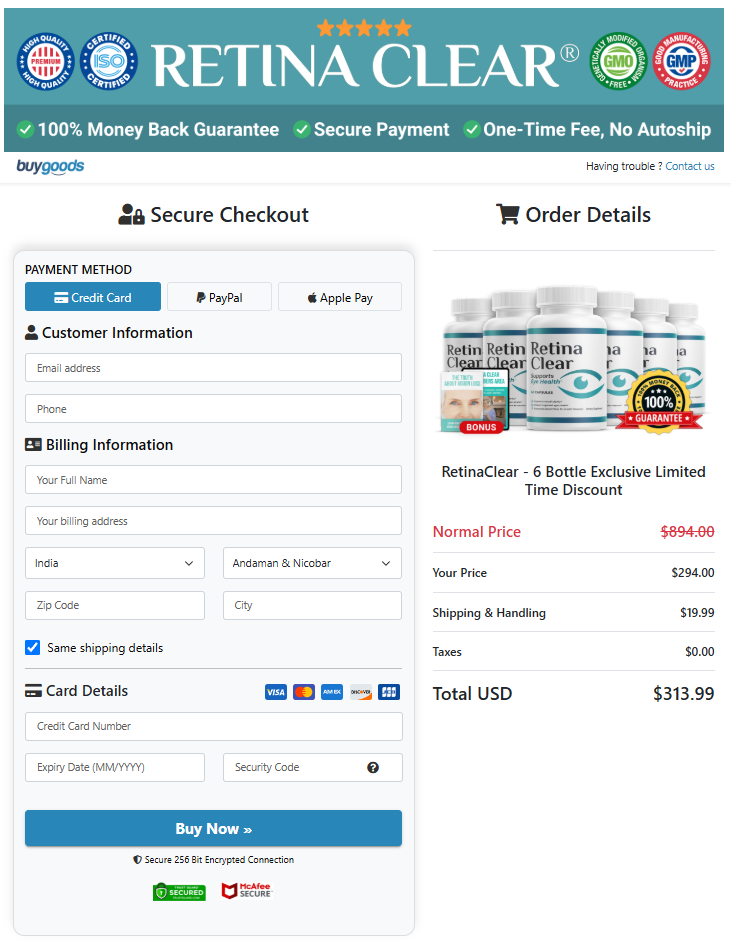
- Order through the official checkout page
- Check pack size, price and shipping before paying
- Read the refund policy and keep your receipt
- Avoid third-party sellers to reduce counterfeit risk
Disclosure: this site may earn a commission if you buy through links on this page, at no extra cost to you.
Final Thoughts on Retina Clear
Retina Clear is an eye health supplement aimed at adults who want nutritional support for everyday vision. The idea behind it is reasonable: key nutrients such as lutein, zeaxanthin, omega-3s, antioxidants and minerals are all discussed in connection with the eyes, and many people do not get enough of them through food alone.
At the same time, honest expectations matter. A supplement cannot fix refractive errors, cure disease or replace professional care. Its value is as one part of a bigger plan: regular eye exams, screen breaks, sun protection, a colourful diet, good sleep and no smoking. If you decide to try Retina Clear, read the label carefully, take it as directed, give it time, and talk to your doctor if you have any health condition or take any medicine.
Your eyes carry you through every day. A few small, steady habits now are the best gift you can give your future vision.
Disclaimer
The information on this website is for general education only and is not medical advice. It is not a substitute for professional diagnosis or treatment. Always seek the advice of a qualified healthcare provider with any questions about a medical condition or before starting a supplement. Never ignore professional advice or delay seeking it because of something you read here.
*These statements have not been evaluated by the Food and Drug Administration. This product is not intended to diagnose, treat, cure or prevent any disease. Individual results vary.
Affiliate disclosure: some links on this site are affiliate links. If you purchase through them, we may receive a commission at no additional cost to you. This does not affect our commitment to accurate, balanced information.